Shockwave Therapy – Treatment for Pain or Injury
Shockwave therapy (also called ‘extracorporeal shockwave therapy’ or ‘ESWT’) is a treatment technique in which patients are exposed to powerful ‘shock waves’, which are precisely directed by means of a treatment head so that they reach the desired location in the body and have a mechanical effect. The best-known medical application is the crushing of kidney stones using shock waves.
Physiotherapists apply the method for treating complaints of the musculoskeletal system, for example in tennis elbow, calcification in the shoulder joint, chronic inflammation of an Achilles tendon and heel spurs.
Shockwaves accelerate the healing process by activating the self-healing properties of the body, they stimulate the metabolism and improve blood circulation.
Did you know that Shockwave Therapy has been safely treating muscle, ligament and bone injuries for decades? Shockwave machines can be found at Olympic events, at the World Cup, at athletic events and at major medical institutions around the world, including the Mayo Clinic.
Shockwave Therapy has been well studied in hundreds of medical research papers and is capable of treating a number of leg and foot disorders. Some examples include:
- Plantar Fasciitis/ Heel Spurs
- Achilles Tendon Problems
- Shin Splints
- Neuroma
Myths?
It is very painful. If discomfort is felt, this typically means that the area of concern is being targeted. The discomfort felt is often described as tolerable and if it is untolerable or painful, we can adjust the settings immediately.
You cannot treat long-standing problems with shockwave. The opposite is true, shockwave treats chronic/long-standing problems better than most other treatments, but can still be used to treat new conditions. Shockwave Therapy – Treatment for Pain or Injury
Treatments are costly and not covered by insurance. Treatment is not covered by OHIP, but is usually covered under a third party insurance plan. Every plan is different, so you would need to inquire with your benefit provider. Often times, coverage will be listed as Chiropodist/Podiatrist services.
Process?
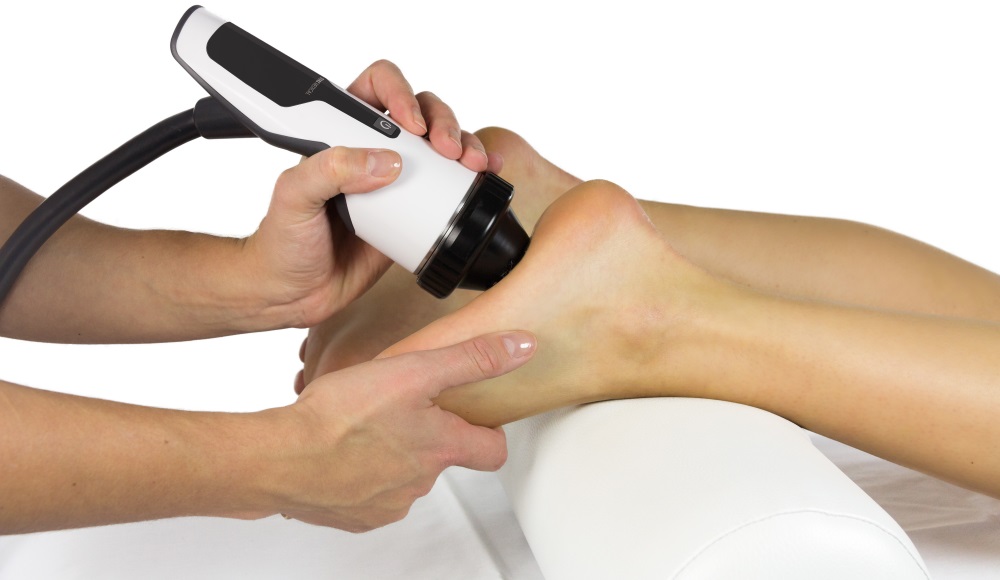
The wand is placed against the skin and short, high energy pulses are created. This causes a ripple effect (think of a stone hitting pondwater), transferring energy to the damaged tissues, stimulating repair, healing and reducing pain with time. Each treatment typically takes 15-30 minutes depending on the area being treated. You can expect to have 3-5 treatments.
Safety?
The use of shockwave is very safe in adults. It has been successfully used in Europe for decades. It is a great alternative to surgery as there is no anesthesia, no medications, no downtime and less risks. Shockwave Therapy – Treatment for Pain or Injury
Conditions that would preclude you from obtaining treatment include, pregnancy, some heart conditions (e.g. artificial valve, pacemaker), clotting disorders, taking blood thinners, cancer, infection in the immediate area, age (<16 years). You will want to speak with your clinical specialist to determine if this is the right treatment for you.
Types of shockwave therapy
There are several forms of shockwave therapy. Depending on the type of complaints and on the equipment present, your therapist will choose one of the following forms:
Radial shockwave therapy
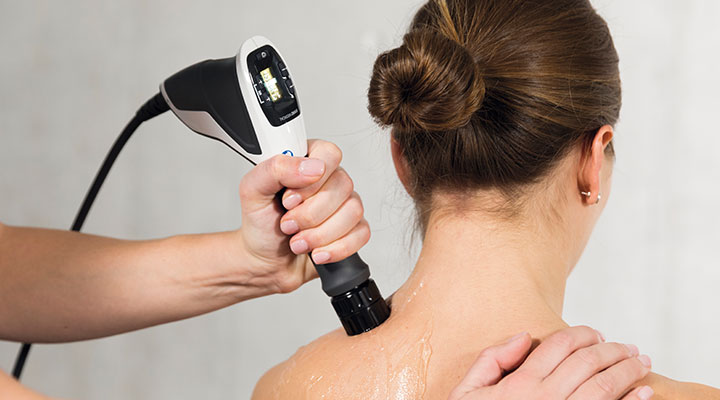
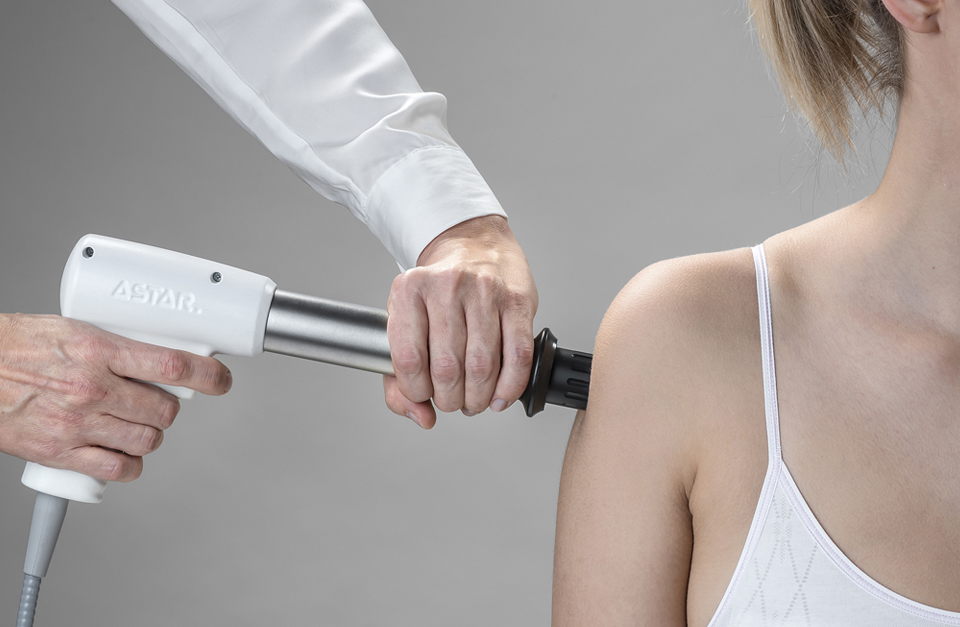
Radial shockwaves are delivered by means of a treatment gun. The released energy is distributed over a larger surface. Radial shockwave therapy equipment produces a low to moderate energy level. The pneumatically generated shockwaves (a compressor is required) are introduced into the body via the gun over a larger (radial) surface.
Focused shockwave therapy
Focused shockwaves are not generated pneumatically, but an electromagnetic source is used. With focused shockwave the maximum energy is reached at a specific concentrated point in the body. These devices produce a medium to high energy level.
Planar shockwave therapy
If you are considering the use of shockwave therapy in wound management, the technology must be adapted to a larger treatment area. In order to generate ‘planar shockwaves’, the reflector used in the treatment head of the shockwave device must be made of a generalized parabolic reflector. The concentrated point of these plane waves is thereby “deconcentrated”. This means that a concentrated point no longer exists. This stimulates a larger zone.
How shockwave therapy works
Shockwave therapy is a modern and very effective treatment method. The term ‘shockwave’ refers to high-energy sound impulses that move like waves through a medium (water, air or a solid). Shockwaves accelerate the healing process by activating the self-healing properties of the body, they stimulate metabolism and improve blood circulation.
Mechanical Effects:
- Breakdown of calcifications and sclerosis
Pain management:
- Effect on superficial nerve endings
- Hyperstimulation of nociceptors
- Release of endorphins
Tissue Recovery:
- Hyperaemia and neovascularization
- Increase in growth factors
- Increased profiling of mesenchymal stem cells
- Improving Cell Metabolism
How is shockwave therapy performed?
The therapist locates the pain zone and applies a gel. Then he delivers shockwaves by moving the shockwave treatment gun / head in circular movements over the region to be treated.
Benefits of shockwave therapy
Benefits in practice
- Successful in 80% of the cases
- Short treatment time: about 10-20 minutes
- Needs an average of 6-8 treatment sessions
- Realistic alternative to surgery
Indications for shockwave therapy
Standard indications (most obvious)
- Chronic tendinopathy, pseudoarthrosis, urology
Common indications (case reports/studies)
- Myofascial Syndromes, Wound Management
Expert indications (case reports/theory)
- Spasticity, Contractures, Osgood Schlatter
Experimental indications (theory/expert opinion)
- Osteoarthritis, ischemia, nerve injury, bacterial infections
Who is a candidate for ESWT?
The Food and Drug Administration has approved the use of ESWT for the treatment of plantar fasciopathy. However, Dr. Finnoff notes that multiple high-quality randomized clinical trials have provided substantial evidence that ESWT is a safe and effective noninvasive option for treating tendinopathy throughout the musculoskeletal system.
Dr. Finnoff and his Mayo Clinic colleagues are currently using ESWT to treat chronic, recalcitrant tendinopathy throughout the body. Mayo sports medicine specialists have found this therapy beneficial for treating the following areas of tendinopathy:
- Rotator cuff
- Lateral epicondyle
- Medial epicondyle
- Greater trochanter (gluteus medius and minimus)
- Proximal hamstring origin
- Rectus femoris
- Distal quadricep
- Patellar tendon
- Posterior tibial
- Peroneal
- Achilles
- Plantar fascia
Benefits
Dr. Finnoff notes that this approach fills a need for athletes whose injuries are not responding to first line treatments, such as rest, ice, therapeutic exercise, bracing and orthotics, but who are not yet ready to consider more-invasive or surgical options.
“Say we are treating a basketball player in the middle of the season who is experiencing jumper’s knee that is inhibiting his or her ability to practice or play,” explains Dr. Finnoff. “ESWT might be the next option for that athlete after we have tried all of the standard nonoperative treatments. Normally, when athletes have failed treatment, we have to tell them that they can’t play or that they need to consider more-invasive treatments such as a needle tenotomy, experimental regenerative medicine treatment or surgical debridement, all of which are associated with higher costs, increased risk and longer recovery periods. While often successful, all of those more-invasive therapies require time off and can effectively end an athlete’s season. ESWT thus provides athletes with a really nice intermediate option that, if successful, isn’t season ending.”
Treatment progression and return-to-play guideline
Dr. Finnoff notes that most patients require a series of treatments, each of which lasts less than 30 minutes. “A typical course of treatment is one treatment weekly for three weeks. If someone doesn’t respond to the first two sessions, we usually stop. If they have improvement with three sessions but haven’t achieved the desired level of symptom relief, we can continue as needed,” says Dr. Finnoff. Athletes undergoing ESWT are typically told to gradually increase their activity level based on symptom intensity.
Side effects from ESWT are limited to mild bruising, swelling, pain, numbness or tingling in the treated area, and the recovery is minimal compared with that of surgical intervention.
“Most patients take a day or two off after treatment but don’t require a prolonged recovery period,” says Dr. Finnoff. “Our clinical experience and patient outcomes to date indicate that when performed by experienced practitioners, ESWT is a solid addition to the array of tools we have to offer athletes, and it provides another pathway to optimal recovery that is appealing to athletes and others who wish to remain active,” concludes Dr. Finnoff.


