Our feet bear the weight of our bodies, and most of us spend a great deal of time each day standing or walking. Your feet support even more stress when you participate in running or other athletic activities, or carry heavy items.
It’s important to take care of your feet, and if you have flat feet, it’s even more challenging to maintain healthy, strong feet.
Can Orthotics Help With Pain From Flat Feet?
Flat footed individuals often experience pain that extends from the soles of their feet all the way up into their lower backs. This discomfort has a negative impact on a flat-footed person’s quality of life – even walking through the grocery store can stir up aches and pains. In quest for a solution, many people with flat feet find that orthotics reduce their pain and make their lives a little easier.
What Causes Pain From Flat Feet?
The arch of the foot helps to distribute the weight of a person in motion. When the arch of a foot has fallen, is weak, or is otherwise injured, the body cannot properly distribute its own weight. This leads to undo strain on the structure of the foot, as well as its connecting structure. This strain extends past the point of origin, going on to affect the lower back.
How Do Orthotics Help?
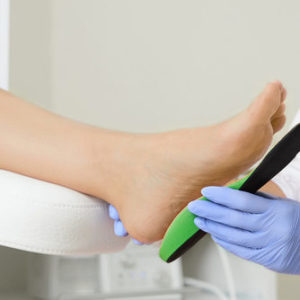
Orthotics help with strain and discomfort from flat feet by supporting and redistributing body weight. They provide support where an arch should be, minimizing the burden on the foot and making day to day activities easily achievable. Orthotics approach the issue of pain from multiple angles, each beneficial for people living with flat feet.
Minimizing Swelling And Pain
The pressure from movement, or even just standing still, can cause swelling in people with flat feet. Without immediate intervention, this swelling becomes increasingly painful. The aftereffects of overworking flat feet can last for days, even if the person adequately rests their feet following physical activity.
The accumulation of this pain and swelling can cause chronic aches or ailments like persistent joint pain or even bunions as a result of the foot swelling too large for the shoe. Friction against footwear can cause ulcers or other surface injuries. Since orthotics are designed to redistribute weight and provide support, the body doesn’t need to work as hard to self correct. Undue stress is mitigated, reducing the potential for pain and swelling.
Making Exercise Easier
Exercise, particularly cardio activities that involve running, walking, or jumping and stationary heavy lifting exercises, place a lot of strain on the feet. Either through impact or raising the effects of gravity on the body by lifting heavy weight, the body experiences a reverberation with the potential to have painful consequences. Form is very important for safe and effective exercise, and flat feet have trouble assuming proper form.
Orthotics can help a flat footed person assume proper form while exercising, allowing the individual to make the most of their workout without having to concentrate on maneuvering around foot discomfort. This is especially important for people who exercise with weights, as squats and lifting rely heavily on the arches of the feet for proper weight distribution.
Improving Balance
Individuals who have developed flat feet over time do so as a result of the structure supporting their natural arches weakening. This weakened structure leads to difficulty balancing, particularly in older adults and the elderly. They’ve become accustomed to walking the same way their entire lives, and the changes in their tendons radically affect their ability to balance.
Orthotics work to replace what was lost or modified with time. By providing support to a fallen arch, mobility and balance are easier. Orthotics effectively simplify independence and physical activity for individuals whose arches have fallen.
Are Custom Orthotics Necessary?
Stores that offer footwear and general goods often sell pre-packaged orthotic solutions in the form of inserts or foot and ankle wraps. These are sometimes a useful alternative for people who don’t have any foot deformity or change in the arch of the foot, but their efficiency is limited. They’re a temporary solution for people with fatigued feet, but since they’re general fit, they cannot possibly address specific areas of concern.
No two feet are the same. The size and shape of the foot, as well as the condition of the arch and configuration of the ankle, all come into play when making a custom orthotic device. When a professional designs your orthotics, he or she is taking your individualized needs into account. Orthotics work better when they’re made to fit your body. Movement becomes more intuitive, and your specific paint points are addressed.
Getting Custom Orthotics for Flat Feet
If you’re experiencing pain, swelling, or discomfort as a result of flat feet, orthotics may be a valuable option for you. Mitigation of the discomfort caused by flat feet can improve your quality of life. It’s important to choose an experienced orthotics provider who understands your needs. We invite you to visit us to discuss your flat feet and the custom orthotic devices we can create specifically for you in Tucson. Discuss your options with your care provider and contact us to see if orthotics can become a part of the solution.
Are orthotics better than supportive shoes?
While supportive shoes help relieve discomfort and pain, your feet are unique. The shape of your feet, the size, and the amount of arch vary from one person to the next, and there are no shoes off-the-shelf that will fit and support your feet perfectly.
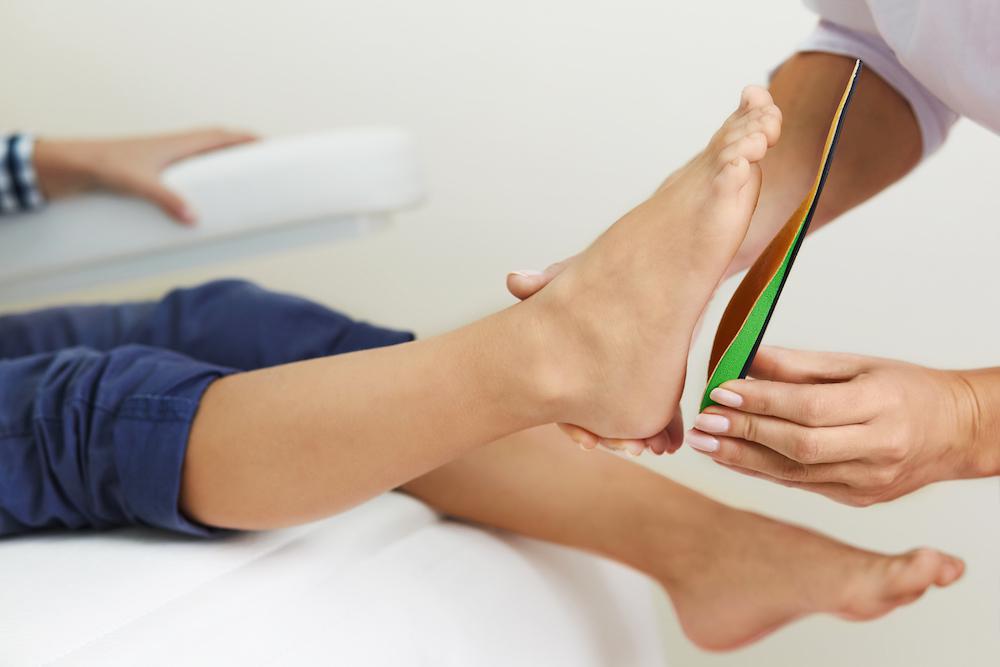
Orthotics, on the other hand, are custom-made insoles created to fit the exact shape and size of your feet. There are several types of orthotics designed to address different problems with your feet, including:
- Arch supports
- Footpads
- Ankle braces
- Shoe inserts
Orthotics can relieve flat-foot pain and offer a nonsurgical way to help improve the function of your feet in ways supportive shoes simply can’t achieve.
How custom orthotics work
Most discomfort from flat feet is experienced in your knees or ankles. Custom orthotics work by supporting your feet to prevent that discomfort. Custom orthotics can also help postpone or avoid surgery for issues resulting from the altered alignment of your legs.
It’s possible to buy off-the-shelf orthotics, but like shoes, they’re not customized to the exact shape and size of your feet and may not offer as much relief as custom orthotics. In some cases, off-the-shelf orthotics could potentially make your condition worse or increase your pain.
The compassionate team at Apple Podiatry Group reviews your medical history and conducts a comprehensive evaluation along with tests needed to determine the root cause of your issues and find a solution to relieve your discomfort and pain.
If your doctor determines that custom orthotics are the best course of treatment, your orthotics are designed and adjusted to ensure they perform as well as possible for your unique situation.


