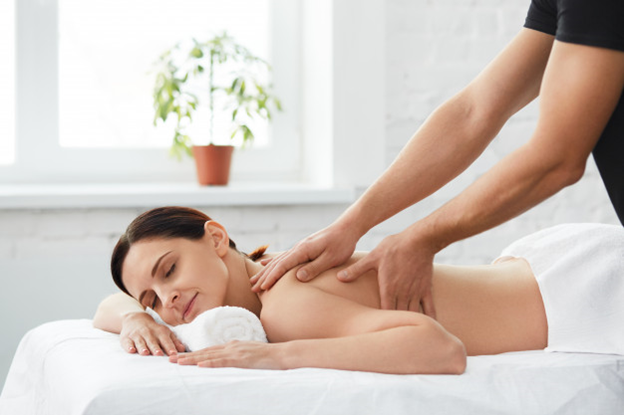
During massage therapy, a therapist will manipulate your muscles and other soft tissues to enhance their function, promote relaxation, or both and help relieve depression.
Massage therapy* has been used in China for more than 3,000 years. Some practitioners believe it can help ease feelings of depression. They suggest that touch releases hormones in your body that create a sense of emotional connection. Massage may help calm your mind and improve your mood, as well as ease physical aches and pains.
While more research is needed, scientists have found evidence to support the idea that massage therapy can provide mental health benefits. According to the National Center for Complementary and Integrative Health, clinical trials suggest that massage therapy may help relieve depression. It may also be a helpful addition to your overall treatment plan.
What is massage therapy?
Performed by a licensed massage therapist, massage therapy involves using different pressures, movements and techniques to manipulate muscles and other soft tissues in the body. With a goal of slowing down your nervous system, massage therapy can be used to release stress and tension, provide relief from symptoms, heal injuries and support wellness.
During massage therapy, a therapist will manipulate your muscles and other soft tissues to enhance their function, promote relaxation, or both.
Massage therapy has been used in China for more than 3,000 years. Some practitioners believe it can help ease feelings of depression. They suggest that touch releases hormones in your body that create a sense of emotional connection. Massage may help calm your mind and improve your mood, as well as ease physical aches and pains.
While more research is needed, scientists have found evidence to support the idea that massage therapy can provide mental health benefits. According to the National Center for Complementary and Integrative Health, clinical trials suggest that massage therapy may help relieve depression. It may also be a helpful addition to your overall treatment plan.

Defining Depression
Perhaps one of the most difficult things about depression when talking about ways to help people who suffer is that arriving at a simple, straightforward definition of depression is next to impossible. Depression, unlike some other medical conditions, is seemingly fluid in nature, meaning the cause(s) and how symptoms manifest are often unique to the individual and can be a secondary complaint of another primary health condition, such as Alzheimer’s, for example, or other mental health issues. In other words, my depression isn’t your depression isn’t someone else’s depression.
That’s not to suggest, however, that there aren’t guidelines around diagnosing depression. Some people might think that depression is simply someone who is sad, but there’s a lot more to this condition than simply feeling down. Yes, sadness and unhappiness are definitely indicators of depression but, according to the Mayo Clinic, so are anger and irritability, loss of interest in activities that were once enjoyable, sleep disturbances, changes in appetite, cognitive problems, as well as physical pain, such as back pain or headaches.
There can also be different types of depression. For example, some women experience depression both during pregnancy and after delivery, while other people may be affected seasonally or have anxiety that accompanies the depression.
How can massage therapy help relieve depression?
When your muscles and connective tissues become stiff or rigid, it can cause pain and limit your movement. Massage therapy can help relieve this tension in your muscles and connective tissues. It also increases your blood flow and promotes relaxation.
If you have depression, massage therapy probably won’t cure your condition. But it may help relieve the physical symptoms associated with it. For example, massage may help alleviate sluggishness, back pain, joint pain, and muscle aches. It can also help relieve fatigue and sleeping problems.
The Benefits of Massage for Depression
When you ask exactly how massage therapy works to benefit people with depression, the most accurate answer is “we don’t yet know.”
But that’s not to say the benefits aren’t real, and some, like Christopher Moyer, PhD and assistant professor of psychology at the University of Wisconsin–Stout, posit that massage therapy may work in similar ways as psychotherapy. “The size and effect of massage therapy on trait anxiety and depression is virtually the same as that routinely found in the research studies of psychotherapy for those same conditions,” he explains. “Typically, both take place in a private setting and are based on a ‘50-minute hour’ for the length of the session. Repeated sessions on a weekly schedule—or similar—would be a traditional or common pattern when the goal is long-term reduction of anxiety or depression.”
The other striking similarity is that both are dependent on an interpersonal relationship founded on trust. “Some psychotherapy researchers think that the existence of the trusting relationship—sometimes referred to as the therapeutic bond, or as the working alliance—is the most important component of psychotherapy’s effectiveness,” Moyer says. “And the same may also be true for massage therapy, though this is something that needs to be researched.”
Remember, too, that depression isn’t just mental health issues—some of the symptoms manifest physically, too. “Depression is considered a mental illness, but one feels it in the body as well, a sense of heaviness in the corporeal,” says Alice Sanvito, a massage therapist and owner of Massage-St. Louis in St. Louis, Missouri. “The physical experience of massage can change the physical sensation of heaviness to something lighter and can restore the feeling of living in one’s body again instead of being lost in one’s head.”
Moyer suggests something similar. “It’s tempting to say that yes, psychotherapy ought to have the greater potential to help because it ought to provide the person with skills and insight that reduce anxiety and depression, and that help the person avoid them in the future,” he explains. “And who is to say that massage therapy doesn’t do something similar to that? It’s possible that receiving massage therapy gives a person a kind of insight, in that it reeducates the person as to how their body and mind ought to feel when they are relaxed, healthy, less anxious and less depressed.”
There’s also the potential that—similar to chronic pain—some of the value of massage therapy for people with depression comes from interrupting the pattern of symptoms on a regular basis. “Each time one interrupts the pattern and experiences calm, it’s easier to remember what it’s like to live in a more normal state, gives one hope that it is possible,” Sanvito suggests.
The problem, however, is defining what regular means. Although research seems to suggest that more than one massage therapy session is more beneficial for people dealing with depression, beyond that, the information available gets fuzzier. “We do not yet have clear information on how many sessions of massage therapy, or in what pattern or frequency, are optimal or necessary,” Moyer explains. “Weekly sessions would be a good place to start. Then, depending on the response to treatment, that schedule could be adjusted as deemed necessary.
What does massage therapy involve?
During massage therapy, your therapist will rub, stretch, and apply pressure to muscles in your body. Some styles of massage involve over-the-clothes touching. Others involve direct contact with your skin, often with scented oils. Some involve acupuncture needles, warm stones, or complex twisting poses.Here are some common types of massage used in the United States:
- Swedish massage:In this common method, your therapist will apply smooth, circular, kneading actions to your muscles.
- Chair massage: In this method, you will sit on a special chair and lean forward into a headrest. This is a good introduction to massage, since the sessions are usually short and don’t require you to remove any clothing.
- Deep tissue massage: Your massage therapist may use this method to treat tight muscles caused by stress or other problems. They will focus on the muscles closest to your bones, as well as their connective tissues.
- Shiatsu:In this technique, your therapist will apply firm pressure to specific points on your body, much like acupuncture. The pressure is more firm than in many types of massage, but it rarely produces stiffness afterward.
- Reflexology: In this type of massage, your therapist will apply pressure to areas of your feet that are believed to correspond with other systems and organs in your body.
- Aromatherapy massage: In this method, your therapist will combine massage with scented oils to help reduce stress or boost your energy.
- Hot stone massage: During this method, your therapist will place warm flat stones on your body to help relax your muscles. They will also apply pressure to the stones to relieve muscle tension.
Benefits of massage therapy
When performed by a trained professional, massage therapy is generally safe for most people. You’ll find that it provides immediate gratification. You may feel relaxed and calm from the time your massage begins. You can combine it with more conventional treatment for depression, such as medication and psychotherapy.
Limits of massage therapy
On its own, massage therapy won’t provide long-term relief from your depression. It doesn’t address the emotional or chemical problems that are causing your symptoms in a way that can be sustained. It shouldn’t be used as a replacement for more conventional treatment options.
What do the expert say?
Dr. Mason Turner, chief of psychiatry at Kaiser Permanente hospital in San Francisco, suggests that massage therapy can help treat depression by relieving muscle tension and improving physical health. Massage, he said, helps strengthen your body-mind connection.
“Anything that helps the person connect their mind and body together can be helpful,” he told Healthline.
The practice can help improve your overall health and aid in stress management. It can help relax your body, which, in turn, can relax your mind too.
The takeaway
If you suspect you’re experiencing depression or another mental health condition, make an appointment with your doctor. They will likely recommend medications, therapy, or a combination of both. Some complementary treatments, such as massage psychotherapy, may also help relieve your symptoms. Ask your doctor about the potential benefits of adding massage therapy to your treatment plan


