Whether you’re a competitive athlete, a weekend warrior, or a daily walker, dealing with knee pain can put a kink in your favorite activities.
Knee pain is a common issue. In fact, according to the Cleveland Clinic, 18 million people see a doctor for knee pain each year. This includes pain caused by:
- overuse
- osteoarthritis
- tendinitis
- bursitis
- meniscus tears
- sprained knee ligaments
The good news is there are several ways to treat knee pain, including stretching and strengthening exercises that you can do on your own.
In this article, we’ll walk you through some of the most effective exercises you can do to strengthen your knee and reduce knee pain.
The best way to prevent injury is by having strong, flexible muscles and joints which resist strain and injury. With some simple cases of knee pain, certain exercises can help relieve some pain episodes. Remember, never do any exercise that causes increased pain.
What Is Knee Pain?
The knee joint is a hinge that connects the shin bone (tibia) and the thigh bone (femur) at the knee cap (patella). Four main ligaments support the knee joint. They are the:
- Anterior cruciate ligament, or ACL.
- Posterior cruciate ligament, or PCL.
- Medial collateral ligament, or MCL.
- Lateral collateral ligament, or LCL.
Injury to any of these ligaments can cause knee pain.
Two rings of cartilage (the medial and lateral meniscus), attached to the shin bone (tibia), also act as shock absorbers for the knee. When this protective cartilage gradually wears away over time, osteoarthritis develops — causing pain and swelling in the knee. Osteoarthritis is the most common cause of knee pain.
How Does It Feel?
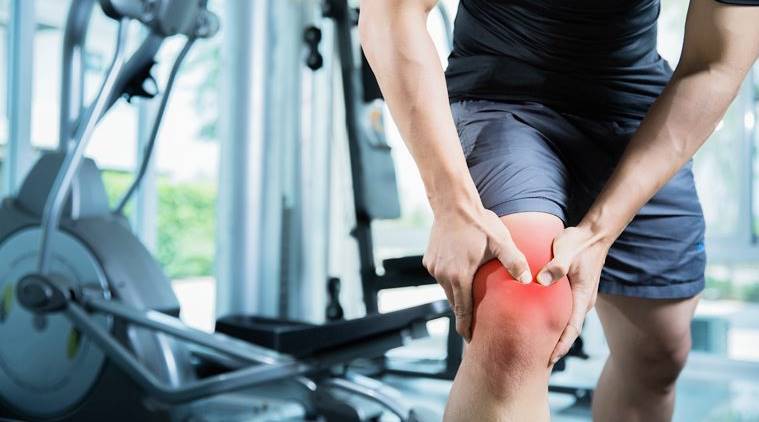
Knee pain can occur suddenly for no apparent reason. It also can develop slowly, as a result of repeated trauma. Knee pain occurs in different parts of the knee. Below is an overview of the types of knee pain, and the areas in which they may occur:
- Anterior knee pain. This condition is also called patellofemoral (or kneecap) pain. Pain is felt around the kneecap (patella) at the front of the knee. This type of knee pain is caused when the kneecap shifts out of position. Kneecap pain commonly affects younger females, such as athletes, and may be due to repeated movements or overuse. Pain often occurs when performing activities like squatting, walking uphill, or climbing stairs.
- Lateral knee pain. This pain occurs on the outside of the knee. It is a type of overuse injury common in runners. It happens when the tendon called the iliotibial band becomes irritated. Pain is often felt when performing activities such as climbing stairs, walking, or running.
- Medial knee pain. This pain occurs along the inside of the knee. It develops when the MCL becomes irritated due to direct injury or overuse. You may feel pain when squatting, walking up or down a hill or ramp, or going down stairs.
- Pain caused by a ligament tear. This type of pain may result from a direct blow to the knee. It also can occur if you twist or pivot your knee while your foot is planted on the ground. Instant pain and swelling usually occur. The knee may feel unstable — like it will give out — when you try to put weight on your leg.
- Pain caused by osteoarthritis, or OA. This type of pain may occur anywhere in the knee where cartilage has broken down. It may begin as mild and gradually get worse. Over time, the pain can begin to limit your ability to fully bend and straighten your knee, climb stairs, squat, or lower yourself to sit in a chair. The knee also may swell, off and on, with increased activity. OA can make it more and more difficult to walk long distances.
How Is It Diagnosed?
Your physical therapist will perform an initial evaluation. The goals are to assess the condition of your knee and to determine the cause(s) of your pain. They will ask you questions about your medical history and your current condition, such as:
- How did your injury occur?
- Were there previous injuries to your knee earlier in your life?
- What are your current symptoms? How have they affected your daily activities?
- Where is your pain located? How intense is your pain? Does your pain vary during the day?
- Are there any activities that you are unable to do? Is it hard for you to complete any activities due to your injury?
- How have you taken care of your knee condition so far? Have you seen other health care providers or had imaging tests (X-ray or MRI)? What are the results of any tests that you have had?
Activities that aggravate your symptoms will be noted as well as any ways that help you reduce your symptoms. Some patients have difficulty with activities at work or with activities such as shopping, cooking, and walking. More active patients may have symptoms during higher levels of activity, like running or other sports. Pain may cause them to stop their desired activity.
Gathering this information allows your physical therapist to understand your condition better. It will help them determine the course of a physical examination, which will include various tests and measures.
Physical examinations vary. Most often, they begin by observing any movements that cause the problems discussed in your interview. Your physical examination will include the area of your pain. It also will include other areas of your body that may have changed or been forced to overwork, including your:
- Low back.
- Hip.
- Thigh.
- Ankle.
- Foot.
Your physical therapist may watch how you walk, use the stairs, squat, and balance on one leg. They will assess the movement and strength of your knee and other regions of your trunk and lower extremity. This will help them determine which areas of your body require treatment to improve your knee condition. Your physical therapist also will gently, but skillfully, press the front, side, and back of your knee, and other areas to find where it is most painful.
The tests your physical therapist does will help them find out if you have:
- Limited range of motion in your knee.
- Pain in your knee with specific movements.
- Weakness in the muscles around your hip, knee, or ankle.
- Limited flexibility in your hip, knee, or ankle.
- Difficulty walking.
- Difficulty performing activities, such as rising from a chair or climbing stairs.
- Problems with your balance or coordination.
- Difficulty controlling your knee during certain activities.
- Difficulty performing specific sports activities (for athletes).
After your interview and physical examination, your physical therapist will discuss their findings with you. They will work with you to develop a program that begins your recovery. Your program may include the treatment techniques listed in the next section.
Exercise and knee pain
If your knee pain is due to an injury, surgery, or arthritis, gentle stretching and strengthening exercises may help ease the pain while also improving your flexibility and range of motion.
Exercising a knee that’s injured or arthritic may seem counterintuitive, but in fact, exercise is better for your knee than keeping it still. Not moving your knee can cause it to stiffen, and this may worsen the pain and make it harder to go about your daily activities.
Gentle stretching and strengthening exercises can strengthen the muscles that support your knee joint. Having stronger muscles can reduce the impact and stress on your knee, and help your knee joint move more easily.
Before you start an exercise program for knee pain, be sure to talk to your doctor or physical therapist to make sure the exercises are safe for you. Depending on your situation, they may recommend some modifications.
Stretching exercises
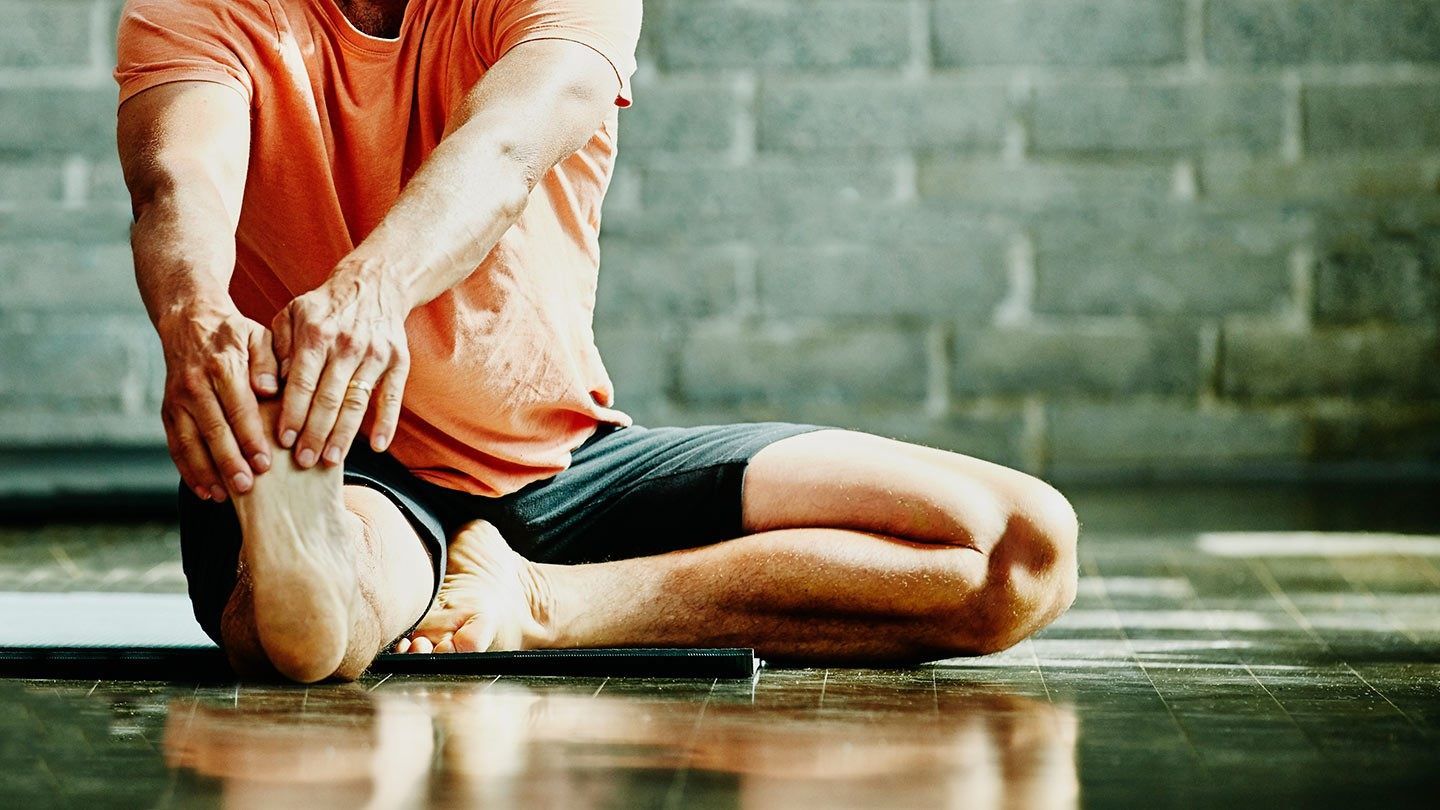
According to the American Academy of Orthopaedic Surgeons, performing lower body stretching exercises may help improve the range of motion and flexibility in your knee joint. This can make it easier to move your knee.
Before you start stretching, it’s important to spend at least 5 to 10 minutes warming up. Low-impact activities like cycling on a stationary bike, walking, or using an elliptical machine are good warmup options.
Once you’re warmed up, do the following three stretches, and then repeat them once you’ve completed the knee strengthening exercises.
Try to do these stretches and exercises at least four to five times a week.
1. Heel and calf stretch
This stretch targets the muscles in your lower leg, specifically your calf muscles.

To do this stretch:
- Stand facing a wall.
- Place your hands on the wall and move one foot back as far as you can comfortably. Toes on both feet should be facing forward, heels flat, with a slight bend in your knees.
- Lean into the stretch and hold for 30 seconds. You should feel the stretch in your back leg.
- Change legs and repeat.
- Do this stretch twice for both legs.
2. Quadriceps stretch
This stretch specifically targets your quadriceps, the muscles at the front of your thighs. Performing this move can help improve the flexibility in your hip flexors and quadricep muscles.

To do this stretch:
- Stand next to a wall or use a chair for support. Your feet should be shoulder-width apart.
- Bend one knee so your foot goes up toward your glutes.
- Grab your ankle and gently pull it toward your glutes as far as you can comfortably.
- Hold for 30 seconds.
- Return to the starting position and change legs.
- Repeat 2 times on each side.
3. Hamstring stretch
This stretch targets your hamstrings, the muscles in the back of your thigh.
You should feel this stretch in the back of your leg and up to the base of your glutes. If you flex your foot, you may also feel the stretch in your calves.

To do this stretch:
- For this stretch, you can use a mat to add cushioning under your back.
- Lie down on the floor or mat and straighten both legs. Or, if it’s more comfortable, you can bend both knees with your feet flat on the floor.
- Lift one leg off the floor.
- Place your hands behind your thigh, but below the knee, and gently pull your knee toward your chest until you feel a slight stretch. This shouldn’t be painful.
- Hold for 30 seconds.
- Lower and change legs.
- Repeat 2 times on each side.
Strengthening exercises
According to the American Academy of Orthopaedic Surgeons, you can help reduce the stress on your knee joint by regularly working the muscles around your knee.
To help strengthen your knees, focus on moves that work your hamstrings, quadriceps, glutes, and hip muscles.
4. Half squat
Half squats are an excellent way to strengthen your quadriceps, glutes, and hamstrings without straining your knees.
To do this exercise:
- Get into a standing squat position with your feet shoulder-width apart. Place your hands on your hips or out in front of you for balance.
- Looking straight ahead, slowly squat down about 10 inches. This is the halfway point to a full squat.
- Pause for a few seconds, then stand up by pushing through your heels.
- Do 2 to 3 sets of 10 repetitions.
5. Calf raises
This exercise strengthens the back of your lower legs, which includes your calf muscles.
To do this exercise:
- Stand with your feet shoulder-width apart. Position yourself next to a wall or hold on to the back of a chair for support.
- Lift both your heels off the ground so that you’re standing on the balls of your feet.
- Slowly lower your heels to the starting position. Control is important with this exercise for strengthening your calf muscles.
- Do 2 to 3 sets of 10 repetitions.
6. Hamstring curl
The standing hamstring curl targets your hamstrings and glutes. It also requires good core strength to keep your upper body and hips steady.
To do this exercise:
- Stand facing a wall or use a chair for support. Your feet should be hip-width apart.
- Lift one foot up, bend your knee, and raise your heel toward the ceiling. Go as far as you can, while keeping your upper body still and hips pointing forward.
- Hold for 5 to 10 seconds.
- Relax and lower to the starting position.
- Do 2 to 3 sets of 10 repetitions for each leg.
7. Leg extensions
Using your own body weight, rather than a weighted machine, to strengthen your quadriceps helps keep added pressure off your knees.
To do this exercise:
- Sit up tall in a chair.
- Put your feet flat on the floor, hip-width apart.
- Look straight ahead, contract your thigh muscles, and extend one leg as high as possible without raising your buttocks off the chair.
- Pause, then lower to the starting position.
- Do 2 to 3 sets of 10 repetitions for each leg.
8. Straight leg raises
The straight leg raise strengthens your quadriceps as well as your hip flexor muscles. If you flex your foot at the end of the move, you should also feel your shins tighten.
As this exercise gets easier to do, you can add a 5-pound ankle weight and gradually work up to a heavier weight as you build strength in your legs.
To do this exercise:
- For this exercise, you can use a mat to add cushioning under your back.
- Lie down on the floor with one leg bent and one leg straight out in front of you.
- Contract the quadricep of your straight leg and slowly raise it up off the floor until it’s the same height as your bent knee.
- Pause at the top for 5 seconds, then lower to the starting position
- Do 2 to 3 sets of 10 repetitions for each leg.
9. Side leg raises
This exercise works your hip abductor muscles as well as your glutes. Your hip abductor muscles, located on the outside of your hips, help you to stand, walk, and rotate your legs with ease. Strengthening these muscles can help prevent and treat pain in the hips and knees.
As this exercise gets easier to do, you can add a 5-pound ankle weight and gradually work up to a heavier weight as you build strength in your leg muscles.
To do this exercise:
- Lie on your side with your legs stacked on top of each other. Cradle your head in your hand, and place your other hand on the floor in front of you.
- Raise your top leg as high as you comfortably can. You should feel this on the side of your hips.
- Pause briefly at the top, then lower your leg.
- Do 2 to 3 sets of 10 repetitions for each leg.
10. Prone leg raises
This exercise works your hamstrings as well as your glutes. As this exercise gets easier to do, you can add a 5-pound ankle weight and gradually work up to a heavier weight as you build strength in your legs muscles.
To do this exercise:
- For this exercise, you can use a mat to add cushioning beneath you.
- Lie on your stomach with your legs straight out behind you. You can let your head rest on your arms.
- Engage your glute and hamstring muscles in your left leg and lift your leg as high as you comfortably can without causing pain. Be sure to keep your pelvic bones on the floor throughout this exercise.
- Hold your leg in the lifted position for 5 seconds.
- Lower your leg, rest for 2 seconds, then repeat.
- Do 2 to 3 sets of 10 repetitions for each leg.
Other types of exercise for knee pain
Once you’ve built up the strength in your knees, you may want to consider adding low-impact exercises to your routine. Low-impact exercises typically put less stress on your joints than high-impact exercises, like running or jumping.
Some good examples of low-impact exercises include:
What else can help with knee pain?
Finding relief from knee pain depends on the cause or issue that’s making it difficult for you to go about your daily activities. Carrying excess weight puts extra stress on your knees, which may lead to osteoarthritis.
In this case, the most effective treatment, according to the Cleveland Clinic, is weight loss. Your doctor may recommend a combination of diet and exercise to help you lose weight and strengthen the muscles in your lower body, especially around your knees.
A 2013 studyTrusted Source found that adults with overweight and knee osteoarthritis experienced a reduction in weight and knee pain after 18 months of a diet and exercise program.
But if overuse is the culprit, your doctor will likely suggest RICE — which stands for rest, ice, compression, and elevation — and physical therapy. A physical therapist can work with you to develop a program that includes range of motion exercises, stretches, and muscle strengthening movements.
Physical Therapy Guide to Knee Pain
Knee pain can result from disease, overuse injury, or trauma. Among American adults, approximately 25% have experienced knee pain that affects the function of their knee. Knee pain and conditions related to the knee are common. In runners, the knee is the part of the body that is injured most often. Changes to the knee related to aging (osteoarthritis) commonly occur in people over the age of 50. Thousands of steps, squats, and twists to the knee over a long life can cause changes to cartilage and other parts of the knee.
Knee pain also occurs in growing children. Pain can reduce their participation in physical activities, which may lead to other problems later in life. Changes in the posture of the knee as well as the lower extremity (hip, leg, and ankle) during growth can cause pain in children and teenagers. These developmental changes can affect knee function.
Knee pain can be mild, or it can be severe and sharp. Knee injuries can result from a direct blow to the knee or a sudden movement that strains the knee beyond the normal range of motion. Knee pain can make it hard to walk, rise from a chair, climb stairs, or play sports. Physical therapists are trained to diagnose and treat knee pain and to help ease your pain and restore movement. They also can work together with other members of your health care team.
Physical therapists are movement experts. They improve quality of life through hands-on care, patient education, and prescribed movement.
The bottom line
Knee pain is a common ailment that affects over 18 million adults each year. Performing stretching and strengthening exercises that target the muscles that support your knees may help ease pain, improve range of motion and flexibility, and reduce the risk of future injuries.
With any type of joint pain, it’s best to talk to your doctor or physical therapist before starting an exercise program. They can help you select the exercises that are safest for you. They can also recommend modifications based on your knee pain and the underlying cause.


